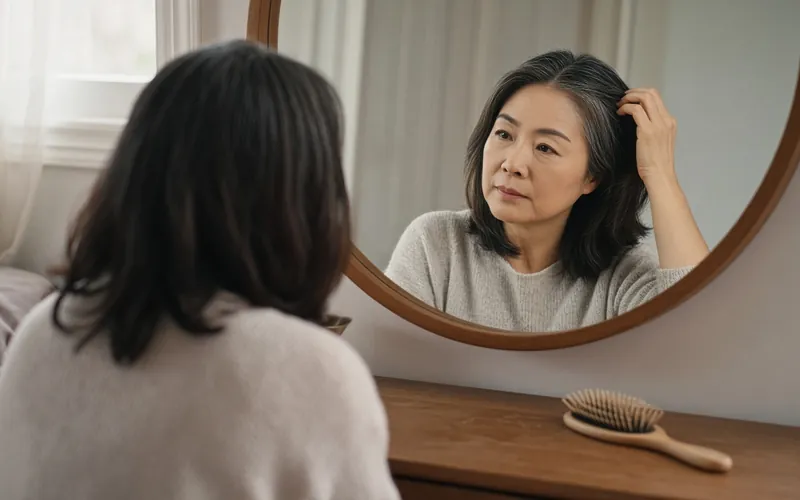
Hair Shedding vs. Hair Loss: How to Tell the Difference
Finding hair in the shower drain can be alarming. Often it is temporary shedding that will settle, but it helps to know the signs.

Every hair on your head has a life cycle. It grows, rests and eventually falls out, and a new hair grows in its place. So seeing hair in your brush is normal. But how much is too much, and when is shedding a sign of something more?
The American Academy of Dermatology (AAD) draws a helpful distinction between hair shedding and hair loss. Understanding the difference can save you a lot of worry and help you decide what to do next.
The hair growth cycle in brief
At any time, most of your scalp hairs are in the growth phase, which can last several years. A small percentage are in a resting phase, after which they shed and a new hair begins to grow from the same follicle.
This continuous cycle means that losing some hair every day is part of healthy hair renewal.
Normal shedding
According to the AAD, it is normal to shed between 50 and 100 hairs a day. You might notice more on days you wash or brush your hair, because loose hairs collect and come out together. People who wash less often may see more hair on wash day.
Excessive shedding (telogen effluvium)
When the body sheds significantly more than 50 to 100 hairs a day, dermatologists call it excessive hair shedding. The medical term is telogen effluvium.
What triggers it
A significant stressor can push many hairs into the resting phase at the same time. The shedding typically begins a few months after the triggering event. The AAD lists common triggers, including:
- Giving birth
- Losing a significant amount of weight
- High fever or illness, including infections like COVID-19
- Surgery
- Recovering from an illness, particularly one with a high fever
- Severe emotional stress, such as divorce, a job loss or the death of a loved one
- Stopping birth control pills
Low iron and thyroid changes can also be involved. The NIH Office of Dietary Supplements and the National Institute of Diabetes and Digestive and Kidney Diseases describe the effects of iron deficiency and hypothyroidism.
What it looks like
- Noticeably more hair in the shower drain, on your pillow or in your brush
- Hair that feels thinner overall rather than in a specific pattern
- Hairs that come out with a small white bulb at the root, which is a sign of a resting-phase hair
How long it lasts
The good news: excessive shedding usually stops on its own once the body readjusts. The AAD notes that hair typically regains its normal fullness within six to nine months after the trigger resolves. If the stress continues, shedding can persist.
Hair loss
Hair loss is different. It happens when something stops hair from growing, or causes it to grow back thinner. The AAD explains common causes include:
- Hereditary hair loss, called female pattern hair loss in women, which causes gradual thinning on top and a widening part. See the AAD's guide to female pattern hair loss and our article on hair thinning after 40.
- Immune system reactions, such as alopecia areata, which causes round bald patches.
- Certain medications and treatments, including some cancer treatments.
- Hairstyles that pull, such as tight ponytails, braids or extensions, which can cause traction alopecia.
- Harsh hair care products and frequent chemical treatments.
- Compulsive hair pulling (trichotillomania).
Mayo Clinic and MedlinePlus describe further causes, including scalp infections and some medical conditions.
How to tell which you have
| Excessive shedding | Hair loss | |
|---|---|---|
| Pattern | Diffuse, all over the scalp | Often patterned (widening part) or patchy |
| Onset | Often sudden, a few months after a trigger | Usually gradual, over years (except alopecia areata) |
| What you notice | Lots of hair falling out | Thinner hair, more visible scalp, sometimes bald patches |
| Outlook | Usually resolves on its own in six to nine months | Typically continues unless treated |
| Next step | Identify and address the trigger; monitor | See a dermatologist for diagnosis and treatment |
It is also possible to have both at once. For example, a stressful event can trigger shedding that makes underlying female pattern hair loss suddenly more noticeable.
What to do if you are shedding
- Look for a trigger. Note any illness, stress, weight change or new medication in the past few months.
- Be gentle with your hair. Avoid tight styles, harsh treatments and very hot tools while hair recovers.
- Eat well. Make sure you are getting enough protein, iron and calories. Very low-calorie diets can trigger shedding.
- Do not panic about washing. Washing does not cause hair loss; it just releases hairs that were already shedding.
- Track it. Take monthly photos of your part and crown to see whether hair is recovering.
- Check in with your clinician if you have symptoms of thyroid problems or anemia, such as fatigue, feeling cold or heavy periods.
Treatments for hair loss
If a dermatologist diagnoses female pattern hair loss, topical minoxidil is FDA-approved for women and can help slow loss and regrow some hair. Other options depend on the cause. For alopecia areata, scarring alopecia and other conditions, specific treatments are available. The key is getting the right diagnosis.
The bottom line
Shedding 50 to 100 hairs a day is normal. A sudden increase in shedding a few months after a stressful event is usually telogen effluvium, which tends to resolve on its own within six to nine months. True hair loss, such as female pattern hair loss or alopecia areata, means hair is not growing back as it should, and it usually needs a dermatologist's help. When in doubt, get it checked; early treatment gives you more options.
Frequently asked questions
How many hairs a day is too many to lose?
The AAD says shedding 50 to 100 hairs a day is normal. Losing noticeably more, such as clumps in the shower or on your pillow, suggests excessive shedding.
Can stress make your hair fall out?
Yes. A significant stressor can trigger excessive shedding, usually a few months later. It typically resolves on its own once the stress passes.
Will my hair grow back after shedding?
In most cases of telogen effluvium, hair regains its normal fullness within six to nine months after the trigger resolves. If it does not, see a dermatologist.
Should I stop washing my hair if it is shedding?
No. Washing does not cause shedding; it releases hairs that were already going to fall out. Gentle washing is fine.
Sources
- Do you have hair shedding or hair loss? American Academy of Dermatology
- Hair loss in women: Female pattern hair loss American Academy of Dermatology
- Hair loss: Symptoms and causes Mayo Clinic
- Hair Loss MedlinePlus (National Library of Medicine)
- Hypothyroidism (Underactive Thyroid) National Institute of Diabetes and Digestive and Kidney Diseases (NIH)
- Iron: Fact Sheet for Consumers NIH Office of Dietary Supplements