Hair Thinning in Women After 40: Causes and Sensible Next Steps
A wider part or a thinner ponytail is common in midlife and often treatable, especially when you act early.
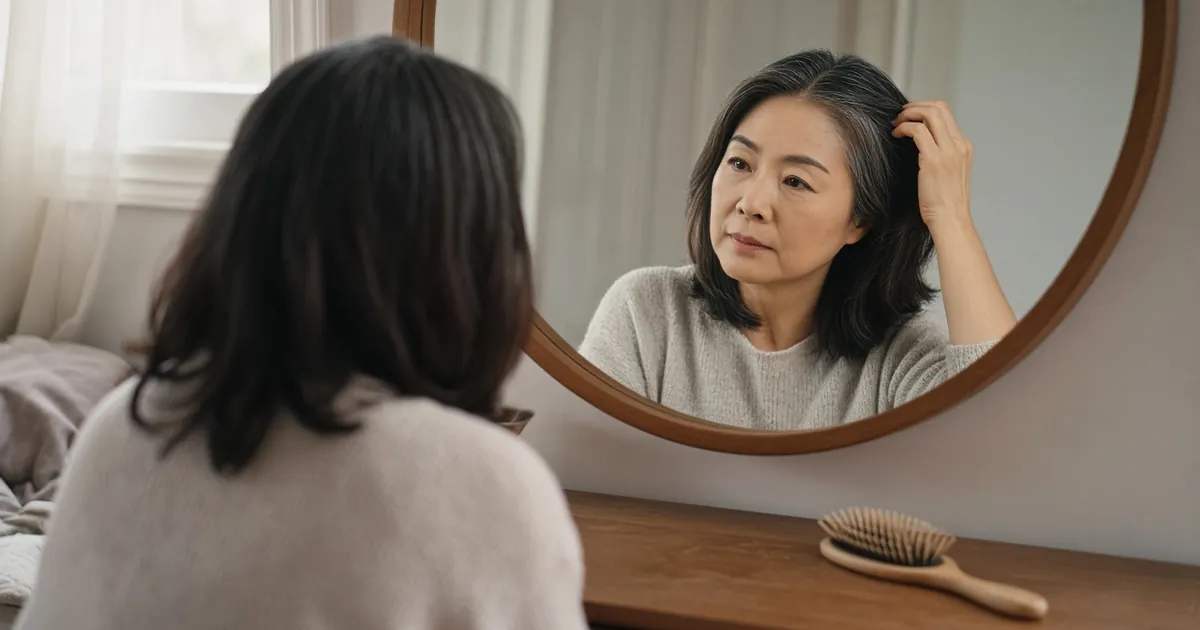
Few changes feel as personal as thinning hair. You might notice more scalp showing under bright light, a part that seems wider, or a ponytail that is noticeably thinner than it used to be. For many women, this starts in their 40s or around menopause.
You are far from alone, and there are real, evidence-based options. This guide explains the common causes of hair thinning in midlife and the sensible next steps.
The most common cause: female pattern hair loss
Female pattern hair loss, also called androgenetic alopecia, is the most common type of hair loss in women. The American Academy of Dermatology (AAD) explains that it is hereditary and that it can begin any time after puberty but is most often noticed around menopause.
What it looks like
Unlike men, who tend to develop a receding hairline or bald spot, women usually notice:
- A part that gradually widens
- Thinning across the top and crown of the head
- More visible scalp, especially under bright light
- Hair that grows back finer and shorter
The front hairline usually stays in place. Complete baldness is rare in women.
Why it happens
In female pattern hair loss, hair follicles gradually shrink, a process called miniaturization. Each growth cycle produces a thinner, shorter hair, until some follicles stop producing visible hair. Genetics play a major role, and hormonal changes around menopause can make it more noticeable.
Other causes of thinning hair in midlife
Mayo Clinic and MedlinePlus describe many possible causes of hair loss. In women over 40, these are worth considering:
Shedding after a stressor (telogen effluvium)
A major stressor, such as illness, surgery, a high fever, significant weight loss, childbirth or emotional stress, can push many hairs into the resting phase at once. A few months later, you may notice a lot of hair falling out. The AAD explains that this kind of excessive shedding usually stops on its own. See our guide to shedding versus hair loss.
Thyroid problems
Both underactive and overactive thyroid can cause hair thinning. The National Institute of Diabetes and Digestive and Kidney Diseases lists thinning hair among the symptoms of hypothyroidism, along with fatigue, feeling cold and weight gain.
Low iron
Iron deficiency, common in women with heavy periods, may contribute to hair shedding. The NHLBI notes that heavy menstrual bleeding is a common cause of iron-deficiency anemia. Perimenopause can bring heavier periods, as Mayo Clinic describes.
Medications and treatments
Some medications, including certain blood thinners, blood pressure medicines, antidepressants and others, can cause hair loss as a side effect. Stopping or starting hormonal birth control or hormone therapy can also affect hair.
Hair care practices
Tight hairstyles such as ponytails, braids and buns, hair extensions, harsh chemical treatments and frequent heat styling can damage hair and, over time, the follicles themselves. This is called traction alopecia when caused by pulling.
Other conditions
Alopecia areata, which causes patchy hair loss, scalp conditions, autoimmune diseases and nutritional problems can also cause hair loss. That is why it helps to get a proper diagnosis.
What actually helps: evidence-based treatments
Minoxidil
Topical minoxidil is approved by the FDA for female pattern hair loss and is available over the counter. The AAD describes it as a treatment that can help stop hair loss and regrow some hair. Some practical points:
- It is available as a 2% solution and a 5% foam for women.
- It needs to be used consistently, usually once or twice daily, for at least several months before results are visible.
- Initial shedding in the first weeks is common and often temporary.
- Benefits continue only as long as you keep using it.
- It is not recommended during pregnancy or breastfeeding.
A dermatologist may also discuss low-dose oral minoxidil, which some dermatologists prescribe off label.
Other dermatologist treatments
Depending on your situation, a dermatologist might discuss:
- Prescription medications that affect hormones, such as spironolactone, for some women
- Platelet-rich plasma (PRP) injections, which use your own blood components
- Low-level light therapy devices, some of which are FDA-cleared
- Hair transplant surgery for suitable candidates
Each has its own benefits, costs and risks. A board-certified dermatologist can help you weigh them.
Treating underlying causes
If testing shows low iron, a thyroid problem or another medical cause, treating it may improve hair over time.
Gentle hair care habits
These will not reverse female pattern hair loss, but they reduce breakage and make hair look fuller:
- Use a gentle shampoo and conditioner, and avoid scrubbing the scalp roughly.
- Let hair air-dry when possible, or use heat on a lower setting.
- Avoid tight hairstyles and pulling hair back tightly.
- Limit harsh chemical treatments such as bleaching, perms and relaxers.
- Consider a shorter cut or layers, which can make thin hair look fuller.
- Ask a stylist about volumizing products, root-lifting techniques and color that reduces contrast with the scalp.
What about supplements and natural remedies?
Hair supplements are heavily marketed, but evidence is limited. Biotin, for example, helps only if you are actually deficient, which is rare, and high doses can interfere with lab tests. See our guide to iron, biotin, zinc and hair. We also look at the evidence for rosemary in rosemary for hair: what we know so far.
The AAD advises seeing a dermatologist before relying on supplements, because diagnosing the cause is the key to choosing a treatment that works.
The bottom line
Thinning hair in your 40s and 50s is common, often hereditary and frequently treatable. Female pattern hair loss is the usual culprit, but thyroid problems, low iron, stress and medications can play a role, so a proper diagnosis is the best first step. Minoxidil is an FDA-approved treatment that helps many women, and a dermatologist can offer more options. The earlier you act, the more hair you are likely to keep.
Frequently asked questions
Is hair thinning normal during menopause?
Many women notice thinning around menopause, often because female pattern hair loss becomes more visible. It is common, but it is worth getting checked to rule out other causes like thyroid problems or low iron.
Does minoxidil work for women?
Topical minoxidil is FDA-approved for female pattern hair loss and helps many women slow loss and regrow some hair. It takes several months of consistent use to see results, and benefits last only as long as you keep using it.
Can stress cause hair thinning?
A major stressor can trigger temporary shedding, called telogen effluvium, usually a few months after the event. This type of shedding often resolves on its own.
What kind of doctor should I see for thinning hair?
A board-certified dermatologist specializes in hair and scalp conditions. Your primary care clinician can also order blood tests to check for thyroid problems or low iron.
Sources
- Hair loss in women: Female pattern hair loss American Academy of Dermatology
- Hair loss: Symptoms and causes Mayo Clinic
- Hair Loss MedlinePlus (National Library of Medicine)
- Do you have hair shedding or hair loss? American Academy of Dermatology
- Hypothyroidism (Underactive Thyroid) National Institute of Diabetes and Digestive and Kidney Diseases (NIH)
- Iron-Deficiency Anemia National Heart, Lung, and Blood Institute (NIH)
- Perimenopause: Symptoms and causes Mayo Clinic