Bone Health After 40: What Every Woman Should Know About Osteoporosis
Osteoporosis is called a silent disease because it has no symptoms until a bone breaks. Midlife is the time to protect your skeleton.
Most of us do not think about our bones until something goes wrong. But for women, midlife is a critical time for bone health. The years around menopause bring a period of faster bone loss, and the choices you make now can affect your risk of fractures for decades.
This guide explains what happens to bones in midlife, who is at risk and what you can do.
How bones change over a lifetime
Bone is living tissue. Throughout life, your body breaks down old bone and builds new bone. In childhood and young adulthood, building outpaces breakdown, and bone mass peaks around age 30. After that, we slowly lose more bone than we build.
For women, bone loss speeds up in the years around menopause. Estrogen helps protect bone, and as estrogen levels fall, bone breakdown increases. The National Institute of Arthritis and Musculoskeletal and Skin Diseases (NIAMS) notes that women can lose bone rapidly in the first years after menopause.
What is osteoporosis?
Osteoporosis is a condition in which bones become weak and brittle, so they break more easily. Mayo Clinic explains that bones can become so weak that a fall or even mild stresses, such as bending over or coughing, can cause a fracture. Fractures most often occur in the hip, wrist and spine.
Osteoporosis is often called a "silent disease" because it usually causes no symptoms until a bone breaks. Some people notice back pain, loss of height over time or a stooped posture, which can be signs of fractures in the spine.
Osteopenia means bone density is lower than normal but not low enough to be classified as osteoporosis. It is a signal to take bone health seriously.
Who is at risk?
According to Mayo Clinic and NIAMS, risk factors include:
Factors you cannot change
- Being female. Women are much more likely than men to develop osteoporosis.
- Age. Risk increases as you get older.
- Menopause, especially early menopause or surgical removal of the ovaries.
- Family history, particularly a parent who broke a hip.
- Body frame. Smaller, thinner women have less bone mass to draw from.
- Race. White and Asian women are at highest risk, although osteoporosis can affect anyone.
Factors you can influence
- Low calcium and vitamin D intake
- Physical inactivity
- Smoking
- Excess alcohol
- Very low body weight or eating disorders
Medical conditions and medications
Certain conditions, such as rheumatoid arthritis, celiac disease, an overactive thyroid and some hormonal disorders, increase risk. Long-term use of some medications, particularly oral corticosteroids, and some others used for seizures, cancer and acid reflux can also affect bone.
Bone density testing
A bone density test, usually a DXA scan, measures bone mineral density at the hip and spine. It is quick, painless and uses a very low dose of radiation. MedlinePlus explains how bone density testing is used to diagnose osteoporosis.
The U.S. Preventive Services Task Force recommends screening for osteoporosis in:
- Women aged 65 and older
- Postmenopausal women younger than 65 who are at increased risk, as determined by a formal risk assessment tool
If you are in your 40s or 50s and have risk factors, such as early menopause, a family history of hip fracture, low body weight, smoking or long-term steroid use, ask your clinician whether you should be assessed.
How to protect your bones
Get enough calcium
The NIH Office of Dietary Supplements recommends 1,000 mg of calcium a day for women 19 to 50 and 1,200 mg for women 51 and older, ideally mostly from food. See calcium and vitamin D after 40.
Get enough vitamin D
Vitamin D helps your body absorb calcium. The ODS recommends 600 IU a day for adults up to age 70 and 800 IU after 70. Many people need a supplement to reach this.
Do weight-bearing and strength exercises
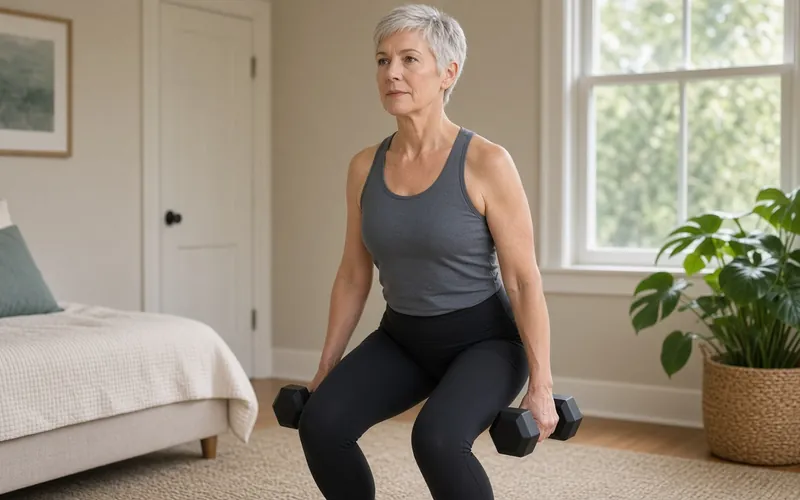
Bones respond to stress by getting stronger. NIAMS recommends weight-bearing exercise, such as walking, dancing, hiking and stair climbing, and resistance exercise, such as lifting weights or using resistance bands. The CDC recommends muscle-strengthening activities at least two days a week. See strength training for women over 40.
Work on balance
Many fractures result from falls. Balance exercises, such as standing on one foot, heel-to-toe walking and tai chi, can reduce fall risk.
Don't smoke and limit alcohol
Smoking is linked with lower bone density. Heavy drinking increases the risk of osteoporosis and falls.
Eat enough protein
Protein is part of the bone matrix and supports muscle, which helps prevent falls. See protein needs after 40.
Make your home safer
Remove trip hazards like loose rugs and clutter, use night lights, install grab bars in the bathroom and wear supportive shoes.
Treatment options
If you are diagnosed with osteoporosis or are at high risk of fractures, your clinician may recommend medication in addition to lifestyle measures. Several types of medications can slow bone loss or help build bone. Hormone therapy around menopause can also help prevent bone loss in some women. Each option has benefits and risks, so it is important to discuss them with your clinician.
The bottom line
Bone loss speeds up after menopause, and osteoporosis is silent until a bone breaks. The good news is that you can take action at any age: get enough calcium and vitamin D, do weight-bearing and strength exercises, work on balance, avoid smoking and limit alcohol. Know your risk factors and ask your clinician about bone density testing, especially if you are 65 or older or have risk factors at a younger age.
Frequently asked questions
At what age should women get a bone density test?
The USPSTF recommends screening for women 65 and older, and for younger postmenopausal women at increased risk. Ask your clinician whether you should be tested earlier.
Can you rebuild bone after menopause?
Exercise, good nutrition and, when needed, medication can slow bone loss and in some cases improve bone density. It is never too late to take steps to protect your bones.
What exercise is best for bones?
A combination of weight-bearing activities, such as walking and stair climbing, and strength training, such as lifting weights, is recommended. Balance exercises help prevent falls.
Does menopause cause osteoporosis?
Menopause does not directly cause osteoporosis, but the drop in estrogen speeds up bone loss, which increases the risk.
Sources
- Osteoporosis National Institute of Arthritis and Musculoskeletal and Skin Diseases (NIH)
- Osteoporosis: Symptoms and causes Mayo Clinic
- Osteoporosis MedlinePlus (National Library of Medicine)
- Osteoporosis to Prevent Fractures: Screening U.S. Preventive Services Task Force
- Calcium: Fact Sheet for Consumers NIH Office of Dietary Supplements
- Vitamin D: Fact Sheet for Consumers NIH Office of Dietary Supplements
- Adult Activity: An Overview Centers for Disease Control and Prevention