Everyday Habits for Steadier Blood Sugar After 40
Energy crashes, cravings and a creeping A1C are common in midlife. These everyday habits help, without extreme diets.
Blood sugar used to be something people thought about only if they had diabetes. Now continuous glucose monitors, social media "glucose hacks" and endless advice about "spikes" have made it a mainstream topic.
Some of that attention is useful. Midlife is a time when the risk of prediabetes and type 2 diabetes rises, and everyday habits can make a real difference. But you do not need extreme diets or gadgets. This guide covers practical, evidence-informed habits that support steadier blood sugar.
Why blood sugar matters in midlife
When you eat carbohydrates, your body breaks them down into glucose, which enters your bloodstream. The hormone insulin helps move glucose into cells for energy. Over time, if cells become less responsive to insulin, called insulin resistance, blood sugar levels rise.
According to the CDC, about 1 in 3 American adults has prediabetes, a condition in which blood sugar levels are higher than normal but not high enough to be diagnosed as type 2 diabetes. More than 8 in 10 of them do not know they have it. Prediabetes raises the risk of type 2 diabetes, heart disease and stroke.
Risk factors include being over 45, having overweight, being physically active less than three times a week, having a parent or sibling with type 2 diabetes, having had gestational diabetes and belonging to certain racial and ethnic groups. Midlife changes, such as losing muscle, moving less, sleeping worse and gaining fat around the abdomen, can all nudge blood sugar upward.
Know your numbers
The first step is knowing where you stand. Blood sugar can be checked with simple blood tests, such as a fasting glucose test or an A1C test, which reflects average blood sugar over about three months. Ask your clinician whether you should be tested, especially if you have risk factors. The CDC offers a short prediabetes risk test on its website.
Everyday habits that help
1. Build a balanced plate
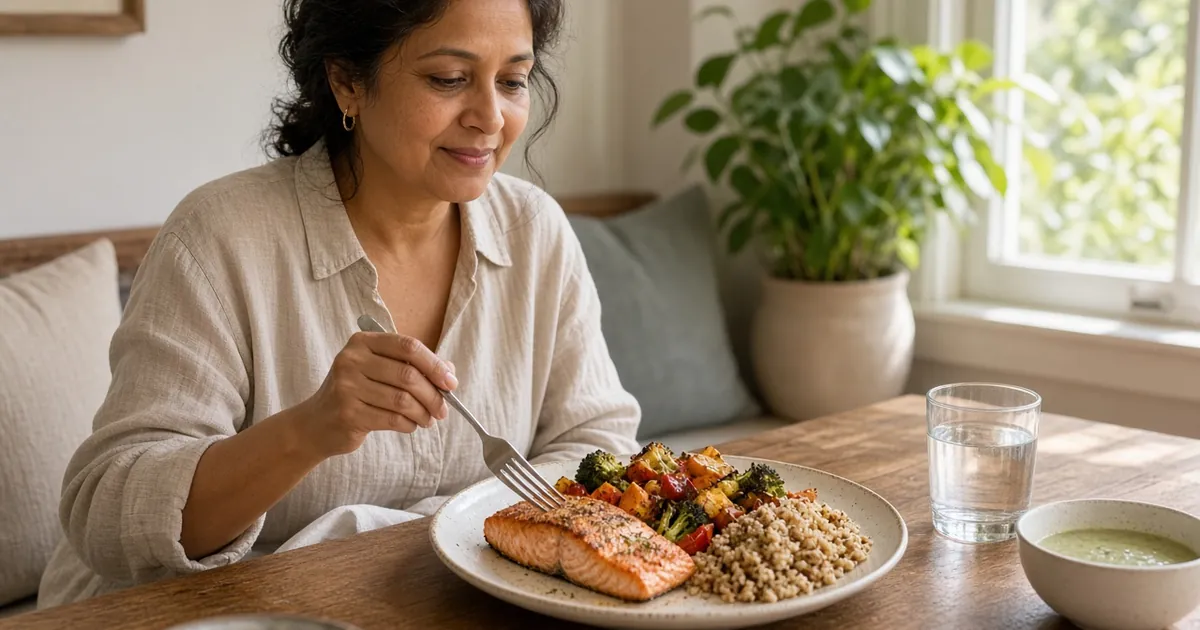
The Harvard Healthy Eating Plate is a simple template:
- Half your plate: vegetables and fruits, with an emphasis on vegetables
- A quarter: whole grains, such as brown rice, quinoa, oats or whole-wheat bread
- A quarter: healthy protein, such as fish, poultry, beans, nuts or tofu
- Healthy oils in moderation, and water instead of sugary drinks
Combining carbohydrates with protein, fiber and healthy fats tends to slow digestion and lead to a gentler rise in blood sugar than eating carbohydrates on their own.
2. Choose fiber-rich carbohydrates
Fiber slows the absorption of sugar. Mayo Clinic notes that soluble fiber in particular can help improve blood sugar levels. Good sources include oats, beans, lentils, apples, citrus fruits, barley and vegetables. Whole grains such as oats, brown rice and whole-wheat bread are better choices than refined grains. See our fiber guide.
3. Cut back on sugary drinks
Sodas, sweetened coffee drinks, juice and energy drinks deliver a lot of sugar quickly without making you feel full. The Dietary Guidelines for Americans recommend limiting added sugars. Swapping sugary drinks for water, sparkling water or unsweetened tea is one of the simplest changes with a meaningful effect.
4. Move after meals
Physical activity helps muscles use glucose. A 10 to 15-minute walk after a meal may help moderate the rise in blood sugar afterward. Overall, the CDC recommends at least 150 minutes a week of moderate activity plus muscle strengthening on two days. Muscle is a major user of glucose, so strength training is particularly helpful. See our guides to walking and strength training.
5. Sleep enough
Short and poor sleep can make the body less sensitive to insulin and increase cravings for sugary foods. The CDC recommends at least seven hours a night for adults.
6. Manage stress
Stress hormones can raise blood sugar. Regular relaxation practices, physical activity and social connection help.
7. Be mindful of alcohol
Alcohol can affect blood sugar and adds calories. If you drink, keep it moderate and have it with food.
8. Eat regular meals
Skipping meals can lead to overeating later. Many people find that regular meals with protein and fiber keep energy and appetite steadier.
Lifestyle change really works: the evidence
The strongest evidence for preventing type 2 diabetes comes from lifestyle programs. The CDC's National Diabetes Prevention Program is based on research showing that people with prediabetes who took part in a structured lifestyle change program, which included healthier eating, increased physical activity and modest weight loss, cut their risk of developing type 2 diabetes by more than half, and by even more in people over 60.
These programs are available in person and online, and many are covered by insurance or Medicare. Ask your clinician or search the CDC's program finder.
A word about blood sugar "hacks"
Social media is full of blood sugar tricks, from drinking vinegar before meals to wearing glucose monitors without diabetes. Some ideas, like eating vegetables first or walking after meals, are reasonable and low risk. Others are overhyped or not backed by good evidence.
Be wary of supplements that claim to "balance blood sugar" or replace diabetes medication. No supplement replaces medical care for diabetes, and some can interact with medications or cause low blood sugar.
The bottom line
Steadier blood sugar comes from everyday habits, not extreme diets. Fill your plate with vegetables, whole grains, healthy protein and fats; choose water over sugary drinks; move regularly, especially after meals; strength train; sleep well; and manage stress. Know your numbers, and if you have prediabetes, a structured lifestyle program can substantially lower your risk of type 2 diabetes.
Frequently asked questions
What is a normal blood sugar level?
Normal ranges depend on the test. Your clinician can interpret your fasting glucose or A1C results and explain what they mean for you.
Can walking after meals lower blood sugar?
Physical activity helps muscles use glucose, and a short walk after eating may help moderate the rise in blood sugar after a meal.
Do I need a continuous glucose monitor if I don't have diabetes?
Most people without diabetes do not need one. Standard blood tests can tell you whether your blood sugar is in a healthy range.
Can prediabetes be reversed?
Many people with prediabetes can return to normal blood sugar levels with lifestyle changes. The CDC's National Diabetes Prevention Program shows such changes substantially lower the risk of type 2 diabetes.
Sources
- Preventing Type 2 Diabetes Centers for Disease Control and Prevention
- National Diabetes Prevention Program Centers for Disease Control and Prevention
- Healthy Eating Plate The Nutrition Source, Harvard T.H. Chan School of Public Health
- Dietary fiber: Essential for a healthy diet Mayo Clinic
- Whole grains: Hearty options for a healthy diet Mayo Clinic
- Adult Activity: An Overview Centers for Disease Control and Prevention
- About Sleep Centers for Disease Control and Prevention
- Dietary Guidelines for Americans U.S. Department of Agriculture and HHS