Walking for Health After 40: How to Build a Habit That Lasts
Walking is the most underrated exercise there is. It is free, gentle on joints and good for your heart, mood, sleep and blood sugar.
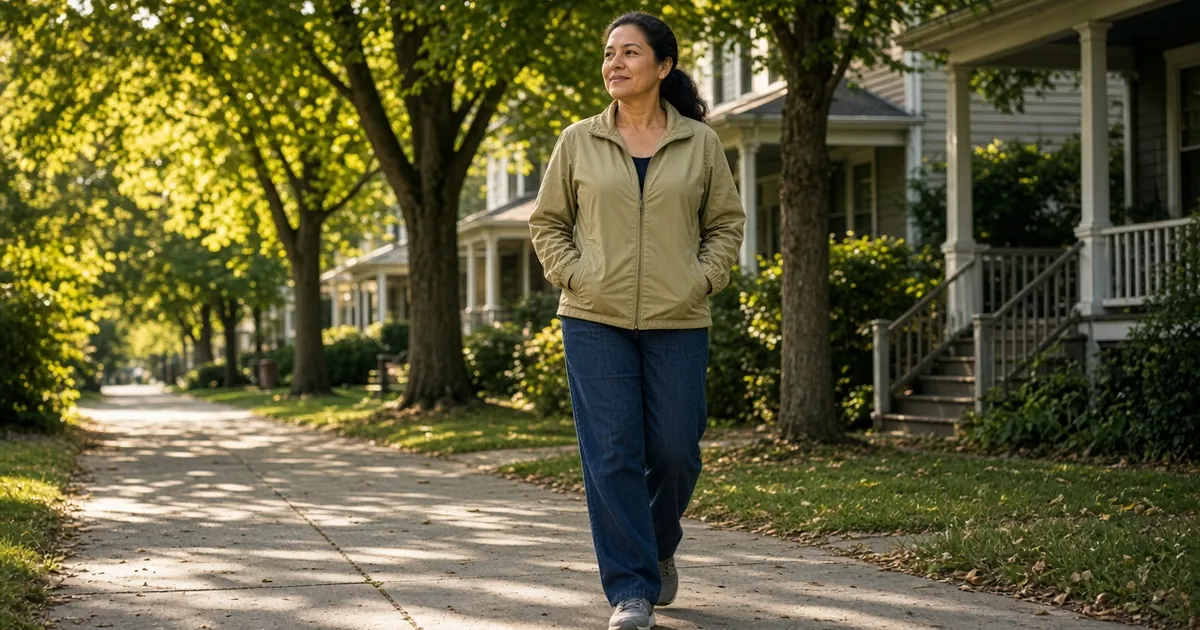
Of all the forms of exercise, walking may be the easiest to start and the easiest to stick with. You do not need special skills, a gym or expensive gear. You can do it almost anywhere, alone or with friends, and you can adjust it to your fitness level.
For women in midlife, walking is particularly valuable. It supports heart health at a time when heart disease risk is rising, helps with blood sugar and weight, eases stress and can improve sleep. Here is how to make it work for you.
The benefits of walking
The American Heart Association describes walking as one of the simplest ways to get moving and improve heart health. Regular brisk walking can help:
- Lower the risk of heart disease and stroke. Heart disease is the leading cause of death for women in the U.S., according to the CDC.
- Improve blood pressure, cholesterol and blood sugar. Regular physical activity is a key part of lowering the risk of type 2 diabetes, as the CDC explains.
- Support a healthy weight, especially combined with healthy eating.
- Boost mood and reduce stress and anxiety.
- Improve sleep.
- Strengthen bones and muscles in the legs and hips, since walking is a weight-bearing activity.
- Keep joints moving, which can ease stiffness.
How much should you walk?
The CDC and the American Heart Association recommend that adults get at least 150 minutes of moderate-intensity aerobic activity a week, such as brisk walking. That is about 30 minutes, five days a week. They also recommend muscle-strengthening activities at least two days a week.
What counts as "moderate"?
Moderate intensity means you are working hard enough to raise your heart rate and breathe faster, but you can still talk. A simple test: you can carry on a conversation, but you could not sing.
What about 10,000 steps?
The 10,000-steps target is popular, but it did not come from scientific research. Studies suggest health benefits start at lower step counts and increase as you walk more. If you track steps, focus on gradually increasing from your current baseline rather than hitting a magic number.
Short walks count
You do not need to walk for 30 minutes straight. The CDC notes that activity can be spread throughout the week, and short bouts add up. Three 10-minute walks a day can be easier to fit in than one longer walk.
Making your walks count
Pick up the pace
Brisk walking gives more cardiovascular benefit than strolling. Try walking as if you are slightly late for an appointment.
Try intervals
Alternate a few minutes of brisk walking with a minute of faster walking, then return to your normal pace. This builds fitness and keeps walks interesting.
Add hills or stairs
Walking uphill or climbing stairs increases intensity and works your leg muscles harder.
Walk after meals
A short walk after eating, even 10 to 15 minutes, may help moderate the rise in blood sugar after a meal. It is also a lovely habit to share with family. See everyday habits for steadier blood sugar.
Use good posture
Stand tall, look ahead rather than at the ground, relax your shoulders, swing your arms naturally and roll from heel to toe.
A simple plan to build the habit
If you are currently inactive, start where you are. This four-week plan builds up gradually.
| Week | Goal |
|---|---|
| Week 1 | 10-minute walks, 5 days this week, at a comfortable pace |
| Week 2 | 15-minute walks, 5 days, with a few minutes of brisker walking |
| Week 3 | 20 to 25-minute walks, 5 days, mostly brisk |
| Week 4 | 30-minute brisk walks, 5 days (or split into shorter walks) |
If you are already active, use the plan to add intensity: hills, intervals or longer weekend walks.
Gear and safety
You do not need much, but a few things help:
- Supportive shoes with good cushioning and a comfortable fit. Replace them when the cushioning wears out.
- Comfortable, breathable clothing in layers, depending on the weather.
- Water for longer walks or hot days.
- Sun protection: sunscreen, a hat and sunglasses. See our sunscreen guide.
- Visibility: bright or reflective clothing if you walk early in the morning or in the evening.
- Safe routes: well-lit paths with sidewalks. Malls and indoor tracks are good options in bad weather.
Overcoming common barriers
- "I'm too tired." A short walk often boosts energy rather than draining it. Try just 10 minutes.
- "It's too hot, cold or wet." Walk indoors at a mall, use a treadmill or follow an indoor walking video.
- "My joints hurt." Walking on softer surfaces, wearing good shoes and starting slowly can help. Talk to your clinician or a physical therapist if pain persists.
- "I'm bored." Change your route, walk with a friend, listen to audiobooks or explore new parks.
- "I don't have time." Fit walks into your day: walk during phone calls, park farther away or take a walking break at lunch.
Make it part of a complete routine
Walking is a wonderful foundation, but the National Institute on Aging recommends combining different types of exercise: endurance activities like walking, strength training and balance and flexibility exercises. Adding strength training twice a week helps protect muscle and bone. See strength training for women over 40.
The bottom line
Walking is a simple, powerful habit for midlife health. Aim for at least 150 minutes of brisk walking a week, in whatever chunks fit your life, and build up gradually. Make your walks enjoyable, wear good shoes and add strength training twice a week. Every step counts.
Frequently asked questions
Is walking enough exercise for women over 40?
Brisk walking can meet the aerobic recommendation of 150 minutes a week. For a complete routine, the CDC also recommends muscle-strengthening activities at least two days a week.
How fast should I walk?
Aim for a brisk pace where you can talk but not sing. That is considered moderate intensity.
Is it better to walk in the morning or evening?
The best time is the one you will stick with. Morning walks provide daylight that helps your body clock, and walks after meals may help with blood sugar.
Do I need 10,000 steps a day?
No. Benefits start at lower step counts. Focus on gradually increasing your daily steps from where you are now.
Sources
- Walking American Heart Association
- Adult Activity: An Overview Centers for Disease Control and Prevention
- AHA Recommendations for Physical Activity in Adults American Heart Association
- Three Types of Exercise Can Improve Your Health and Physical Ability National Institute on Aging (NIH)
- About Women and Heart Disease Centers for Disease Control and Prevention
- Preventing Type 2 Diabetes Centers for Disease Control and Prevention