How Skin Changes in Your 40s and 50s (and a Simple Routine That Helps)
Dryness, new sensitivity, sagging and more visible sun damage are common in midlife. A few consistent habits make a real difference.
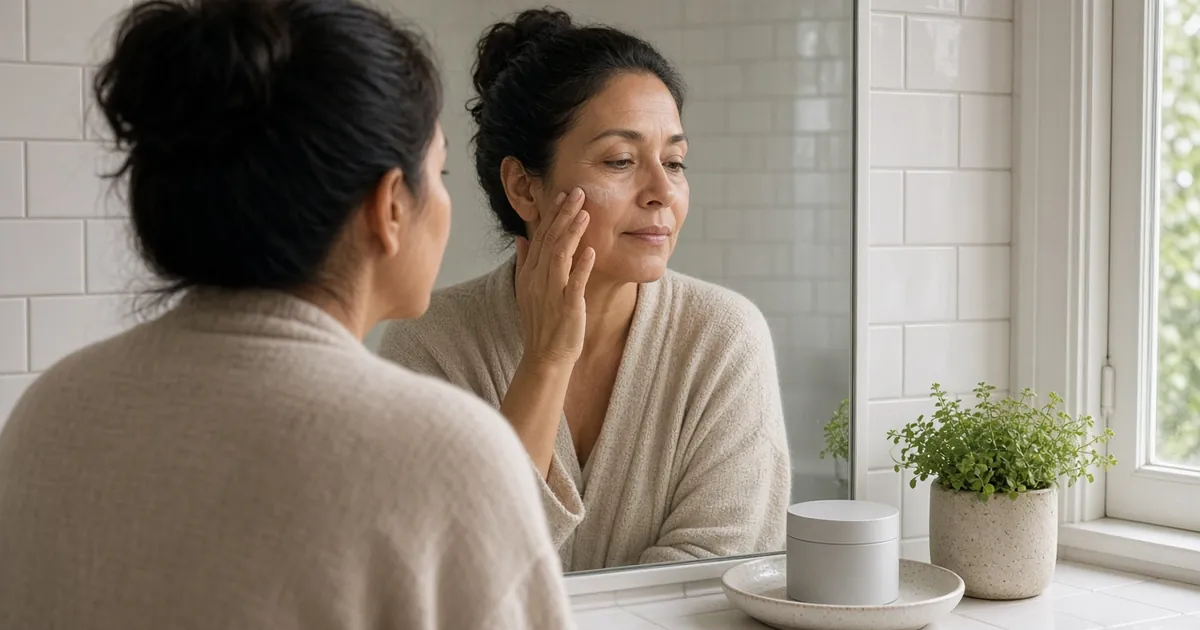
Somewhere in your 40s, your skin may start behaving differently. The moisturizer that used to be enough no longer is. Fine lines deepen, the jawline softens, and dark spots from summers long ago start showing up. Some women also notice new sensitivity, adult acne or a dull, rough texture.
None of this is a failure of willpower or the wrong products. It is a normal response to hormones, time and sun. Understanding what is happening makes it easier to choose what actually helps and skip what does not.
What happens to skin in midlife
Hormonal changes
Estrogen helps skin hold moisture and supports the production of collagen, the protein that gives skin its strength and structure. As estrogen declines during perimenopause and after menopause, skin tends to become drier and thinner. The American Academy of Dermatology (AAD) notes that skin can lose a significant amount of collagen in the first years after menopause, which contributes to sagging and wrinkles.
Other changes the AAD describes around menopause include:
- Dryness and itchiness
- Increased sensitivity and easier irritation
- Slower healing
- Adult acne, as the balance of hormones shifts
- Age spots and other signs of sun damage becoming more visible
- Thinning hair on the head and sometimes more facial hair
Natural aging
Separately from menopause, skin changes with age. MedlinePlus explains that as you get older, skin tends to become thinner, less elastic and drier, and it bruises more easily. Fat under the skin decreases, and oil glands produce less oil.
The sun
The biggest single factor in visible skin aging is ultraviolet (UV) light. Mayo Clinic identifies sun exposure as a major cause of wrinkles, particularly early wrinkles. UV light breaks down the skin's connective tissue, collagen and elastin. Smoking is another important factor that speeds wrinkles. The good news is that protecting your skin from the sun from now on still helps.
A simple midlife skin care routine
The AAD's advice for skin care in your 40s and 50s and during menopause can be distilled into a routine that is simple and affordable. You do not need ten steps or expensive products.
Morning
- Gentle cleanser, or just water. If your skin is dry, a creamy, fragrance-free cleanser is kinder than a foaming one. Some people need only lukewarm water in the morning.
- Moisturizer. Look for ingredients that help skin hold water, such as hyaluronic acid, glycerin and ceramides. Apply to slightly damp skin to lock in moisture.
- Broad-spectrum sunscreen, SPF 30 or higher. Every day, all year round, including cloudy days. See our sunscreen guide.
Evening
- Gentle cleanser to remove sunscreen and makeup.
- Optional treatment. A retinoid, such as an over-the-counter retinol or a prescription retinoid, is one of the best-studied options for fine lines and uneven tone. Start slowly, two or three nights a week, because retinoids can irritate.
- A richer moisturizer. Skin loses more water overnight, so a thicker cream can help.
For your body
Dry skin is common on the arms, legs and back. Short, lukewarm showers, a fragrance-free cleanser and moisturizer applied right after bathing help. The AAD notes that hot water and long showers strip moisture.
Ingredients worth knowing
| Ingredient | What it may help with | Notes |
|---|---|---|
| Broad-spectrum sunscreen | Prevents further sun damage, spots and wrinkles | The most important daily step |
| Retinoids (retinol, prescription tretinoin) | Fine lines, texture, uneven tone | Can irritate; start slowly; avoid in pregnancy |
| Hyaluronic acid, glycerin | Hydration | Helps skin hold water |
| Ceramides | Supports the skin barrier | Helpful for dry, sensitive skin |
| Vitamin C serum | Brightness, antioxidant protection | Formulas vary in stability |
| Gentle exfoliants (lactic acid) | Rough texture, dullness | Use sparingly; can irritate |
What about collagen supplements?
Collagen supplements are heavily marketed to women in midlife. Some studies suggest modest improvements in skin hydration and elasticity, but many were small and funded by manufacturers, and results vary. Harvard's Nutrition Source offers a balanced look at the evidence. We dig into the details in collagen supplements: what the evidence shows.
Lifestyle habits that show in your skin
- Don't smoke. Smoking accelerates wrinkles and dulls skin.
- Sleep. Poor sleep shows up in your face, and good sleep supports overall health.
- Eat a varied diet. Fruits, vegetables, healthy fats and adequate protein support skin as part of overall health.
- Limit alcohol. It can dehydrate skin and worsen flushing.
- Manage stress. Stress can trigger flares of conditions like acne, rosacea and eczema.
When to see a dermatologist
Midlife is a good time for a skin check, especially if you spent a lot of time in the sun when younger or used tanning beds. A dermatologist can also help with persistent acne, rosacea, severe dryness or itching, and discuss prescription treatments for wrinkles and spots.
The bottom line
Skin changes in your 40s and 50s are driven by hormones, natural aging and years of sun exposure. You cannot stop time, but you can make a meaningful difference with a simple routine: gentle cleansing, good moisturizing, daily broad-spectrum sunscreen and, if you like, a retinoid at night. Add healthy habits and regular skin checks, and your skin will be in good shape for the decades ahead.
Frequently asked questions
Why is my skin suddenly so dry in my 40s?
Declining estrogen during perimenopause affects the skin's ability to hold moisture, and oil production decreases with age. Switching to a gentler cleanser and richer moisturizer usually helps.
Can menopause cause adult acne?
Yes. Shifts in the balance of hormones during the menopause transition can trigger acne in some women. A dermatologist can recommend treatments suited to mature, often drier skin.
Is it too late to start using sunscreen at 50?
No. Daily sunscreen helps prevent further sun damage and skin cancer at any age, and it allows other treatments to work better.
What is the single most important anti-aging product?
Dermatologists consistently point to broad-spectrum sunscreen with SPF 30 or higher, used every day.
Sources
- Skin care during menopause American Academy of Dermatology
- Skin care in your 40s and 50s American Academy of Dermatology
- Skin Aging MedlinePlus (National Library of Medicine)
- Wrinkles: Symptoms and causes Mayo Clinic
- How to select a sunscreen American Academy of Dermatology
- What Is Menopause? National Institute on Aging (NIH)
- Collagen The Nutrition Source, Harvard T.H. Chan School of Public Health