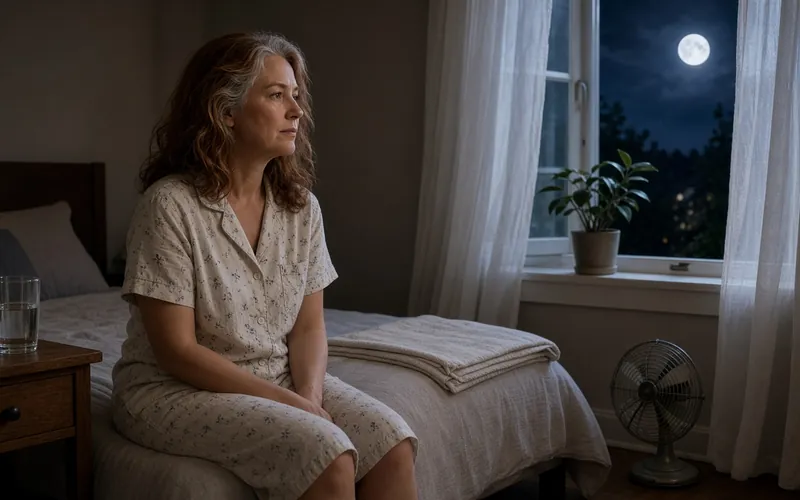
Caffeine, Alcohol and Sleep After 40: How Your Coffee and Wine Affect Your Nights
That afternoon latte and evening glass of wine may be costing you more sleep than you think. Here is what the research shows.

Coffee in the morning, maybe another in the afternoon, a glass of wine with dinner to unwind: for many women, this is a normal, pleasant rhythm. It can also be quietly working against your sleep, especially in midlife when sleep is already becoming lighter.
This guide explains how caffeine and alcohol affect sleep, what reputable guidelines say about amounts, and how to find your personal sweet spot without giving up everything you enjoy.
How caffeine affects sleep
Caffeine works by blocking adenosine, a chemical that builds up in your brain the longer you are awake and creates "sleep pressure." Block adenosine and you feel more alert. Unfortunately, caffeine does not know when you want to stop being alert.
Caffeine lingers. Its effects can last for several hours, and how fast you clear it varies with genetics, medications, pregnancy, smoking and liver health. So an afternoon coffee may still be active at bedtime.
What the research shows
A frequently cited 2013 study in the Journal of Clinical Sleep Medicine gave participants 400 mg of caffeine (roughly the amount in a few cups of brewed coffee) at bedtime, three hours before bed or six hours before bed. Even when taken six hours before bedtime, caffeine reduced total sleep time by more than an hour as measured by a sleep monitor. Notably, participants did not always perceive how much their sleep had been disrupted.
That study used a fairly large dose, and individual responses vary. But it illustrates why many sleep experts suggest a caffeine cut-off in the early afternoon.
How much caffeine is too much?
The FDA states that for healthy adults, 400 milligrams a day, about four or five cups of coffee, is an amount not generally associated with dangerous, negative effects. Mayo Clinic notes that some people are more sensitive and that too much caffeine can cause insomnia, jitteriness, a fast heartbeat, upset stomach and irritability.
Caffeine amounts vary widely between drinks. A large coffee-shop brewed coffee can contain far more than a homemade cup. Here are rough ranges:
| Drink | Typical caffeine |
|---|---|
| Brewed coffee, 8 oz | About 80 to 100 mg |
| Espresso, 1 shot | About 60 to 75 mg |
| Black tea, 8 oz | About 40 to 50 mg |
| Green tea, 8 oz | About 25 to 40 mg |
| Cola, 12 oz | About 30 to 40 mg |
| Energy drink, 8 oz | About 70 to 100 mg or more |
Amounts vary by brand and preparation. Decaf coffee still contains a small amount of caffeine, and some pain relievers and supplements contain caffeine too, so check labels.
How alcohol affects sleep
Alcohol is a sedative, which is why a glass of wine can make you feel drowsy. But as your body processes alcohol through the night, sleep tends to become lighter and more fragmented, often in the second half of the night. Alcohol can also:
- Trigger or worsen hot flashes and night sweats in some women
- Relax throat muscles, which can worsen snoring and sleep apnea
- Increase nighttime trips to the bathroom
- Leave you feeling less rested even after a full night in bed
The National Institute on Aging advises avoiding alcohol close to bedtime as part of good sleep habits.
Alcohol and aging
As we get older, our bodies handle alcohol differently. The National Institute on Aging notes that older adults may become more sensitive to alcohol's effects, and alcohol can interact with many common medications, including some sleep aids, pain relievers and blood pressure medicines.
What counts as a drink?
According to the CDC and the National Institute on Alcohol Abuse and Alcoholism, a standard drink in the U.S. contains about 14 grams of pure alcohol. That is roughly:
- 12 ounces of regular beer (about 5% alcohol)
- 5 ounces of wine (about 12% alcohol)
- 1.5 ounces of distilled spirits (about 40% alcohol)
Many restaurant pours and home pours of wine are larger than 5 ounces, so one "glass" may be more than one drink.
The Dietary Guidelines for Americans advise that adults who choose to drink should limit intake to two drinks or less a day for men and one drink or less a day for women, and note that drinking less is better for health than drinking more.
A two-week experiment
General guidance is useful, but your own body is the best data. Try this simple experiment.
Week 1: move your caffeine cut-off
Keep your usual morning coffee, but set a firm cut-off time, such as noon or 1 p.m. After that, switch to decaf, herbal tea or water. Note your sleep each morning: how long it took to fall asleep, how often you woke and how rested you felt.
Week 2: try alcohol-free evenings
Keep the earlier caffeine cut-off, and also skip alcohol on at least four or five evenings. If you do drink, have it with an early dinner rather than late in the evening, and stick to one standard drink. Again, note your sleep.
At the end of two weeks, compare. Many women are surprised by how much difference these two changes make, especially to 3 a.m. wake-ups and night sweats.
Caffeine and energy: breaking the cycle
Poor sleep makes you reach for more caffeine, and more caffeine late in the day makes sleep worse. If you are caught in that loop:
- Front-load caffeine to the morning, when it gives you the most benefit.
- Get daylight and movement in the afternoon instead of a late coffee. A 10-minute walk can be surprisingly energizing.
- Eat balanced meals with protein and fiber to avoid energy crashes.
- Look at other causes of fatigue. Our guide to always feeling tired after 40 covers iron, thyroid and more.
If you are worried about your drinking, the NIAAA and your clinician can help, and support is confidential.
The bottom line
Caffeine and alcohol are two of the most common and most fixable reasons midlife sleep gets worse. You do not necessarily need to give them up. Moving caffeine earlier and keeping alcohol modest and away from bedtime is often enough. Try the two-week experiment and let your own sleep tell you what works.
Frequently asked questions
What time should I stop drinking coffee?
Many sleep experts suggest stopping caffeine by early afternoon. A study found that caffeine taken six hours before bed still reduced sleep, so if you go to bed at 10 p.m., a cut-off around noon to 2 p.m. is a reasonable starting point.
Does decaf coffee affect sleep?
Decaf contains a small amount of caffeine, usually far less than regular coffee. Most people can drink it in the evening without trouble, but very sensitive people may notice an effect.
Why do I wake up at 3 a.m. after drinking wine?
As your body processes alcohol through the night, sleep tends to become lighter and more broken. Alcohol can also trigger night sweats and bathroom trips. Many women find skipping evening wine reduces early-morning waking.
Is one glass of wine a night okay?
The Dietary Guidelines advise women who drink to limit intake to one drink or less per day, and note that less is better for health. A standard drink of wine is 5 ounces, which is often smaller than a typical pour.
Sources
- Spilling the Beans: How Much Caffeine Is Too Much? U.S. Food and Drug Administration
- Caffeine: How much is too much? Mayo Clinic
- Drake C, et al. Caffeine effects on sleep taken 0, 3, or 6 hours before going to bed. J Clin Sleep Med. 2013 PubMed
- Drinking Levels and Patterns Defined National Institute on Alcohol Abuse and Alcoholism (NIH)
- About Standard Drink Sizes Centers for Disease Control and Prevention
- Facts About Aging and Alcohol National Institute on Aging (NIH)
- Dietary Guidelines for Americans U.S. Department of Agriculture and HHS
- A Good Night's Sleep National Institute on Aging (NIH)